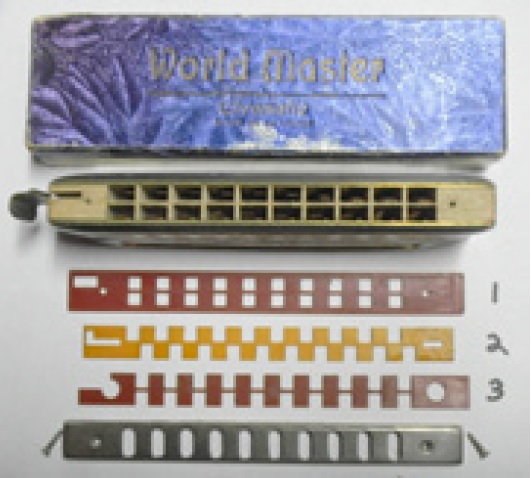
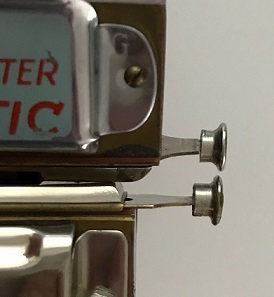
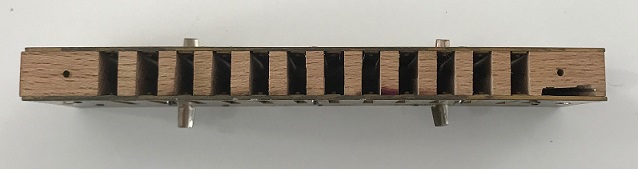
This is another interesting chromatic with an original slide mechanism. F.A. Rauner must have produced this unusual slide chromatic after 1944. The DRWZ 261424 (“Deutsches-Reichs-Waren-Zeichen” -> basically the registration to offer a basic copyright protection for design or function ). The DRWZ initials were used in Germany after 1944. Before that, D.R.G.M. -> Deutsches Reichsgebrauchsmuster were the official initials for copy rights.
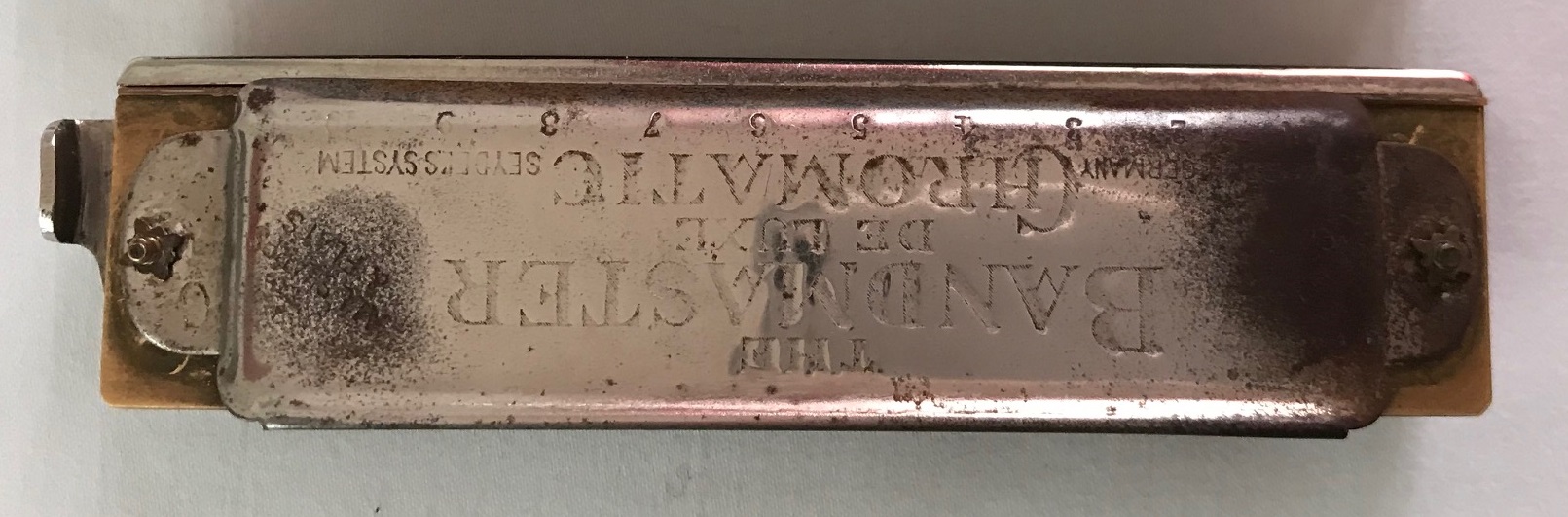
Seydel Bandmaster chromatic with same slider mechanism, 12 hole version
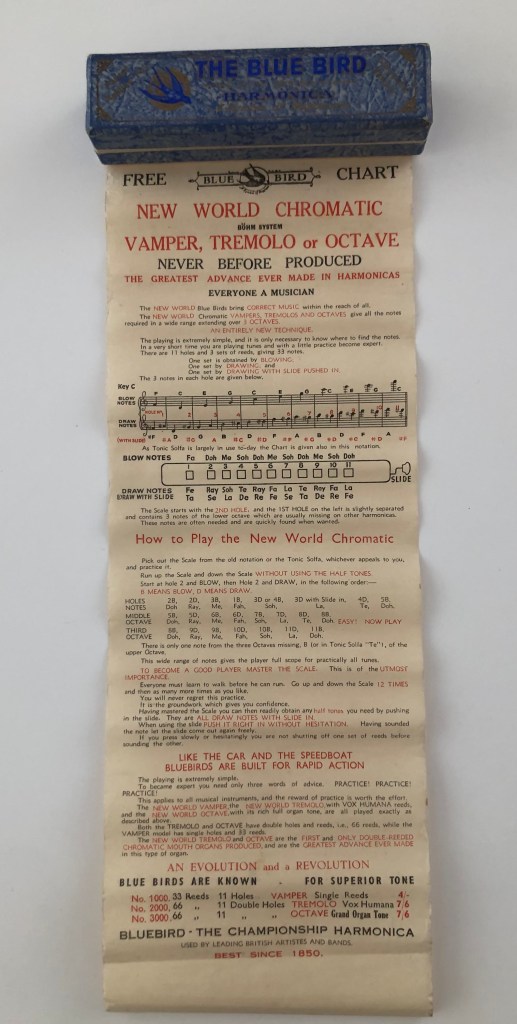
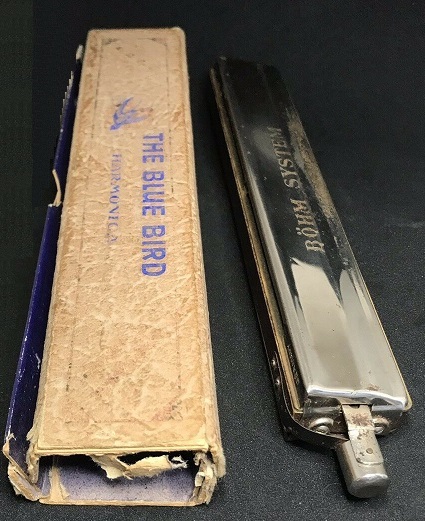
In 1937 Böhm applied for patent #DE703 133. It was granted in 1941. The idea was to use a slider to cover one set of reeds instead of shifting an entire reed plate as described in the earlier patent #DE470354 by Otto Hermann Böhm and applied in earlier Böhm models. The newly patented idea was then realized in several new Böhm chromatic models. The Blue Bird Chromatic Vamper was a single tone chromatic harmonica. As you can see in the below manual the notes were in a particular order.
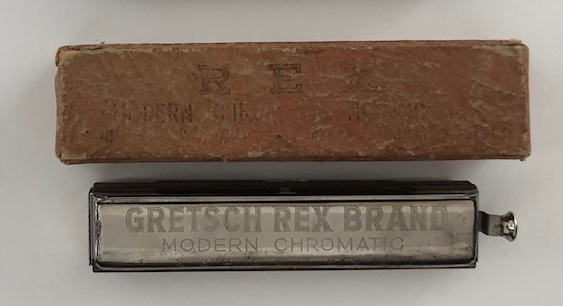
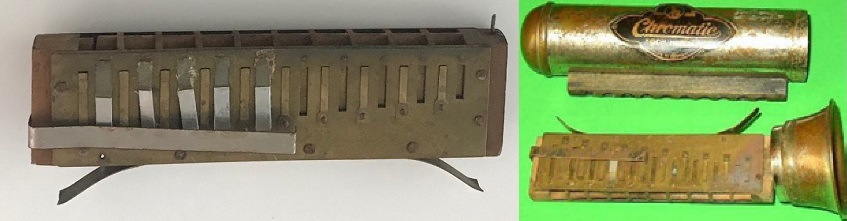
Böhm Blue Bird Chromatic Vamper, also based on the patent from 1929, from my collectionBlue Bird Chromatic Vamper manual showing the exact order of the notesSlider mechanism used in the Blue Bird Chromatic Vamper, courtesy of the Musikinstrumenten Museum in Markneukirchen, GermanyGretsch Rex Band model using the same mechanism. I assume this version was also manufactured by Böhm
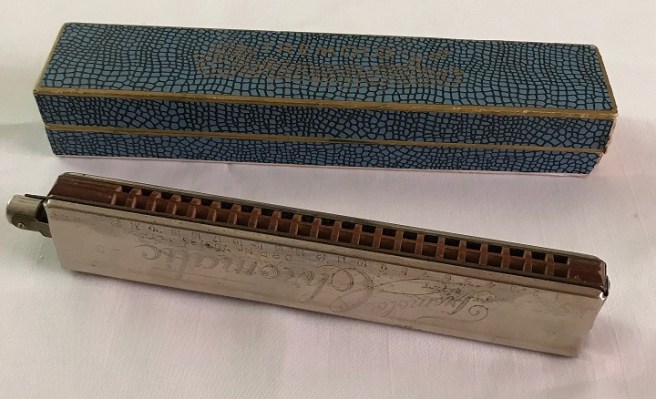
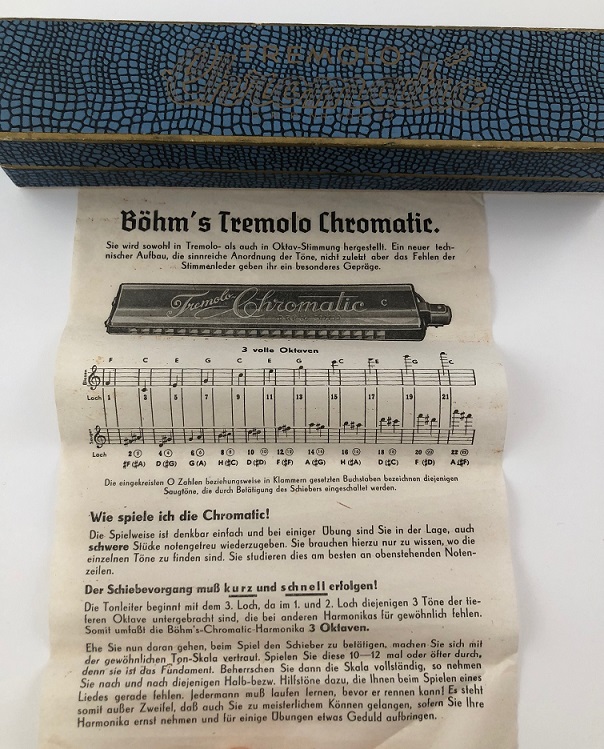
The Tremolo Chromatic, also manufactured by Böhm, followed the same principle of covering one set of reeds.
Böhm Tremolo Chromatic showing the internal mechanism (From John Whiteman’s Collection and Harmonica Anthology)Böhm Tremolo Chromatic, from my collectionBöhm Tremolo Chromatic manual, showing the note orderBöhm also came out with a “Blue Bird” version of the Tremolo Chromatic
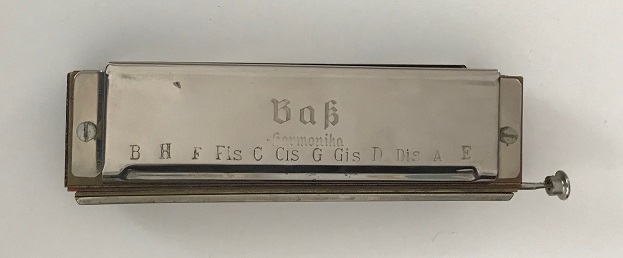
This is a very unique and interesting instrument. It has a range of one octave. The notes are not sorted in chromatic order. The slider serves to move to the next adjacent note which is usually a half step higher (the exception is the last channel A->E) .
It was most likely manufactured by Seydel. Unfortunately, the harmonica came without a box and there is no manufacturer name anywhere on the covers. One thing that points me to Seydel is the slide button. Comparing it to a Seydel/Bandmaster chromatic harmonica button it looks identical. Jugging by the lettering on the covers, my best guess it that it was produced in the late 1930s.
Bass harmonica with slider, from my collection. Most likely produced by Seydel in the late 1930s
Seydel Bandmaster and Bass chromatic. The slide buttons are identical
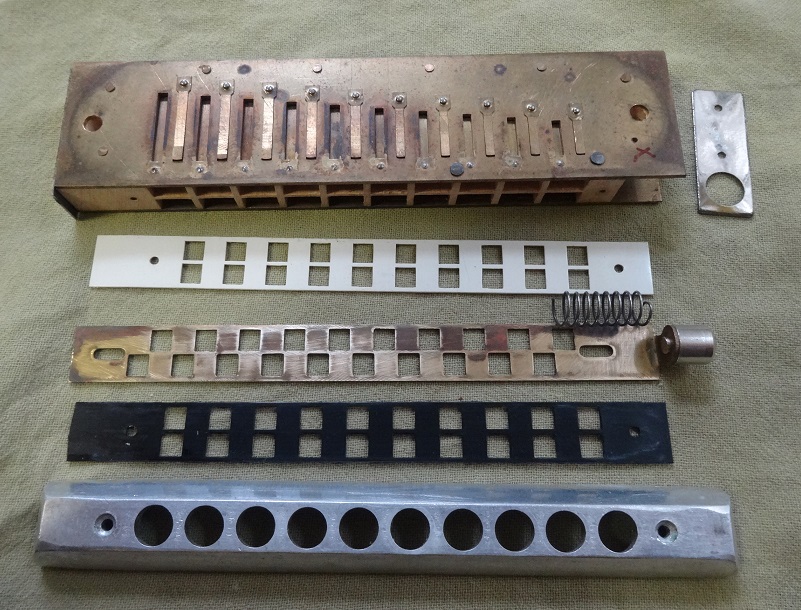
Each channel consists of two blow reeds. This is a contrast to a “regular” chromatic harmonica which comes with blow and draw notes .
Each channel contains two reeds, tuned exactly one octave apart. This concept is similar to a standard Bass harmonica which also comes with two blow notes (one octave apart) per channel .
There are two reeds per channel. One tuned one octave apart
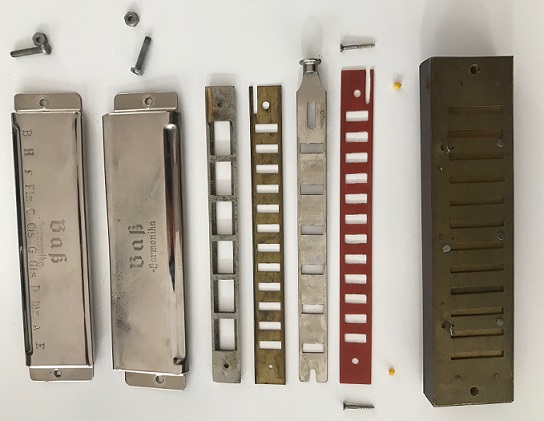
The bass harmonica completely de-assembled
A similar concept was picked up years later by Suzuki when they came out with their own S-48B Bass Chromatic.
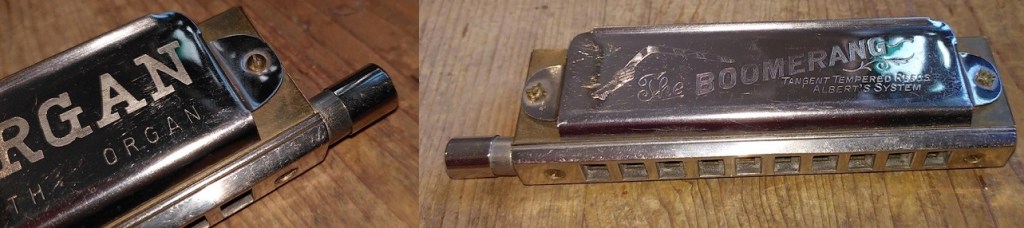
The Chromorgan is a very interesting harmonica not in terms of any new slider invention but rather for its unique boomerang shape.
Boomerang harmonicas were exclusively sold to the Australian market. Frank Albert, the owner of the largest music store in Sydney, commissioned those harmonicas from Seydel in Germany and sold them under the synonym “Albert’s System”. If you ever have a chance to buy the book “Boomerangs and Crackajacks” by Ray Grieve, you will get a great overview of the Australian harmonica history. There is also a blog by Harmonicariffraff showing a list of all harmonicas ever available in Australia.
Chromorgan, dating back to 1936, from my collectionBoomerang Chromatic harmonicas, from my collection
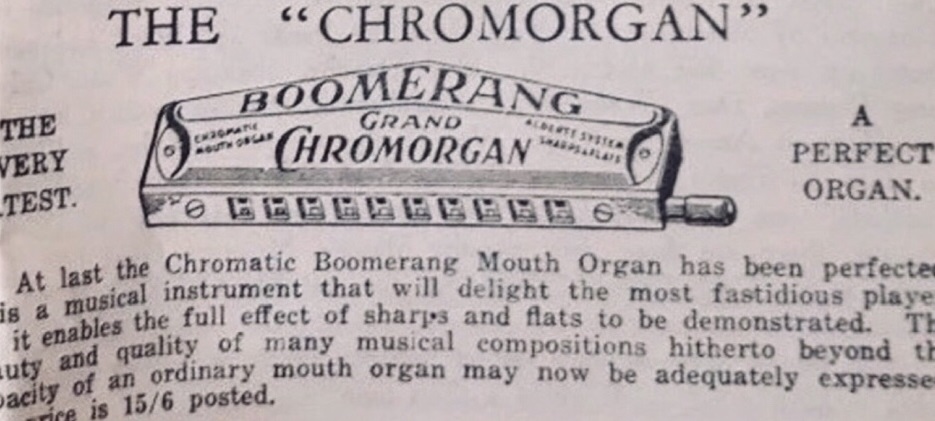
Update: just recently I got contacted by Phil Sheppard (Shep), author of the wonderful blog “Harmonica Riff Raff“ in regards to a Boomerang harmonica advertisement he found in a Boomerang Songster book. The complete article was posted here. In that advertisement the slider button of the instrument looked completely different to the standard buttons.
Chromorgan advertisement from Boomerang Songster book, courtesy Phil Sheppard (Shep)
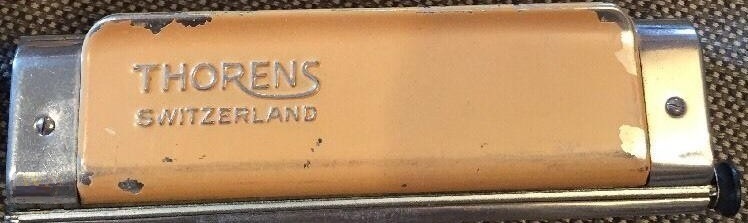
Thorens a Swiss manufacturer of high-end audio equipment used to manufacture harmonicas between 1914-1921 and 1938-1952.
One of the three chromatic harmonicas they manufactured caught my attention. Similar to the Koch chromatic, one of their 10 hole chromatics came with an external compression spring.
10-hole Thorens chromatic harmonica with external compression spring
My assumption is that the 10-hole chromatic with compression spring was the first of the three chromatics Thorens brought to market. I would date it back to the late 1930s.
Thorens chromatics, from my collection
10-hole Thorens chromatic harmonica with enameled covers and external compression spring
In 1930 Hohner presented a new “Chromonica”. It included an internal spring which was another leap in harmonica engineering.
Sketch showing the construction of the internal spring with accompanying slider parts. Even today the “Chromonica” uses the same parts.
The patent #DE490 654 was submitted in 1927 and granted to Hohner in 1930.
Advertisement from the 1938 Hohner catalogueAdvertisement from the 1938 Hohner catalogueThe “Chromonica” by Hohner, from my collection
Additionally, Hohner came out with a three and in 1936 a four octave version of the Chromonica.
Hohner’s Chromonica I,II and III, from my collection
Hohner added also a separate Larry Adler line (junior 10 hole and 12 hole version) with enamel cover plates. Later on, a four octave model was added.
Larry Adler chromatic harmonicas, from my collection. The models in the foreground with enamel came out first. The plain 12 hole and the four octave versions were the replacements some years later
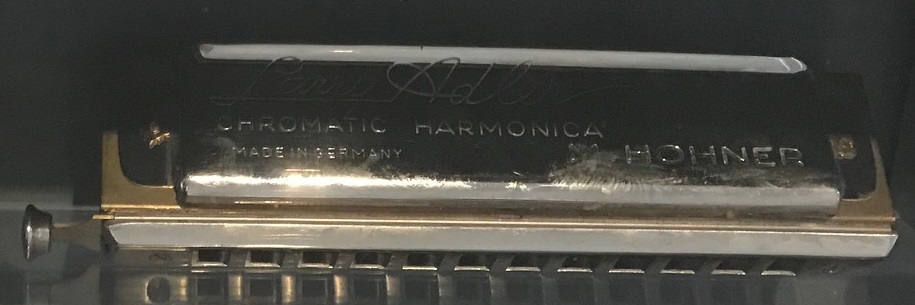
Special edition 12-hole “Larry Adler”. The Cover only show the signature. Special edition 12-hole, courtesy harmonica museum TrossingenRare 14 hole Larry Adler chromatic, from my collection
The “Chromonica” design has been copied by various other harmonica manufacturers. Below a selection of some of the copies:
The Böhm harmonica company founded in 1850 and located in Klingenthal/Germany was one of the major harmonica manufactures in the first half of the twenties century.
The company produced quite an amount of innovative harmonicas. One innovation is described in the patent #DE470354 by Otto Hermann Böhm granted in 1929.
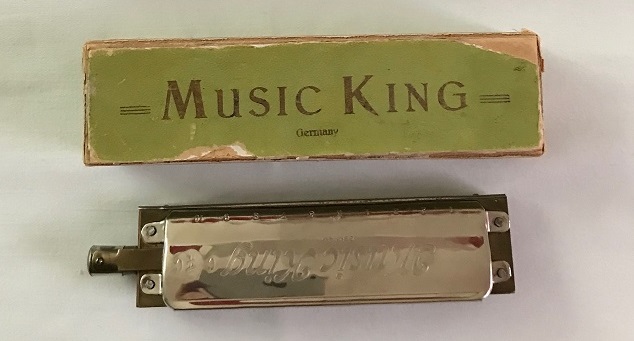
Böhm Music King Chromatic, from my collection. It is based on the 1929 patent by Otto Hermann Böhm
Pat Missin has a detailed technical explanation including pictures showing how this invention works. He also mentions that a similar idea was already patented (# US443607A) in 1890 by John Oefinger and Benjamin F. Butler of Greenfield, Massachusetts.
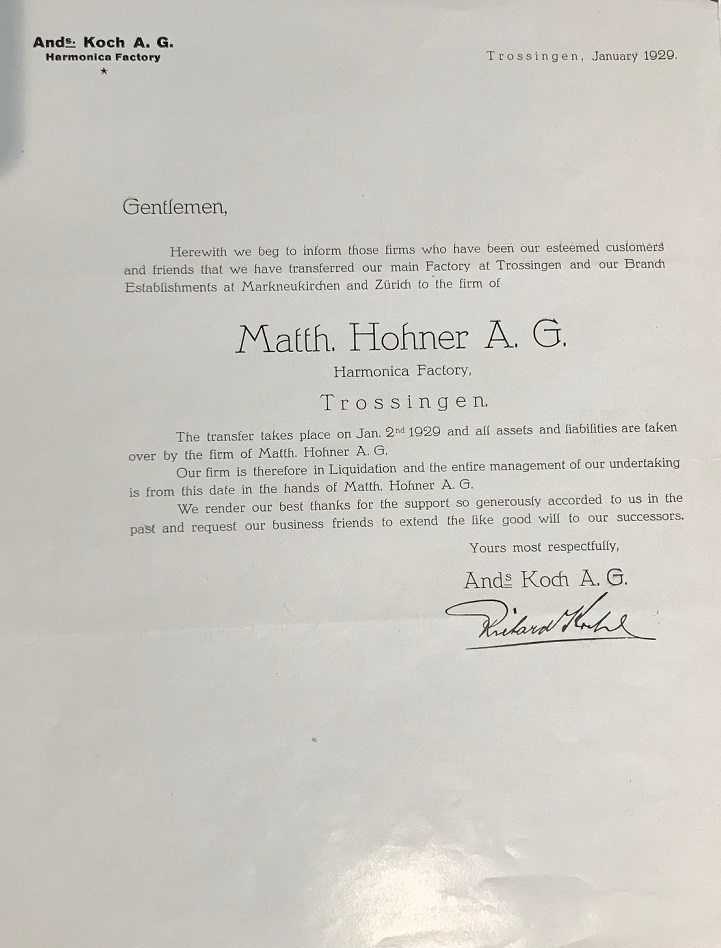
This is the last chromatic harmonica the Koch company produced before they were bought by Hohner at the end of 1928.
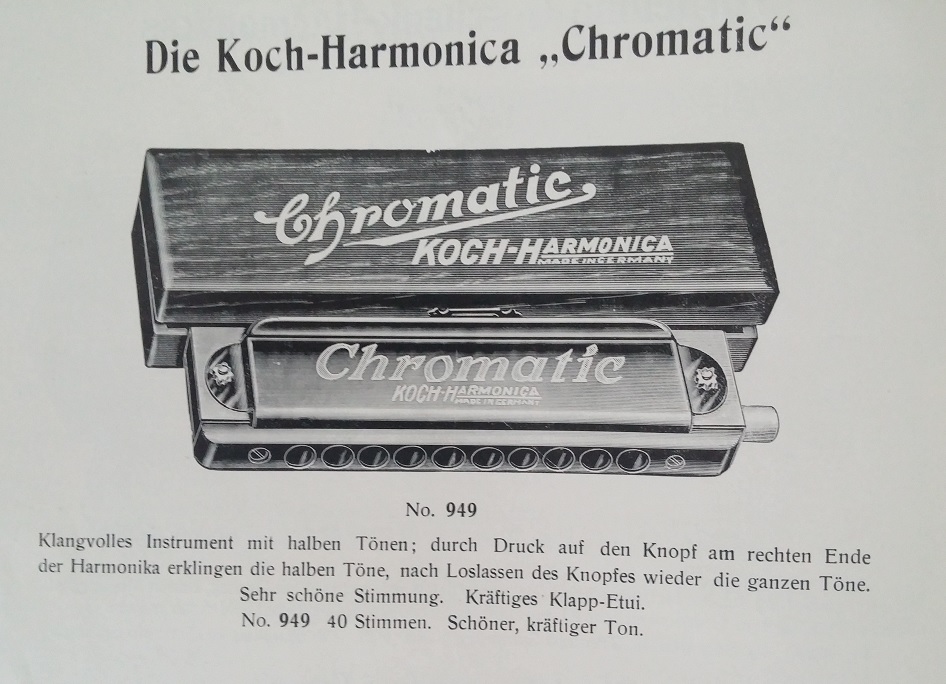
I first saw this harmonica in the 1927 Koch catalogue:
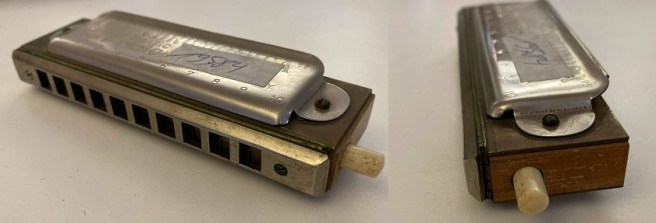
Advertisement for the Koch chromatic, from the Koch 1927 product catalog.Koch chromatic with unique slider mechanism, from my collection.
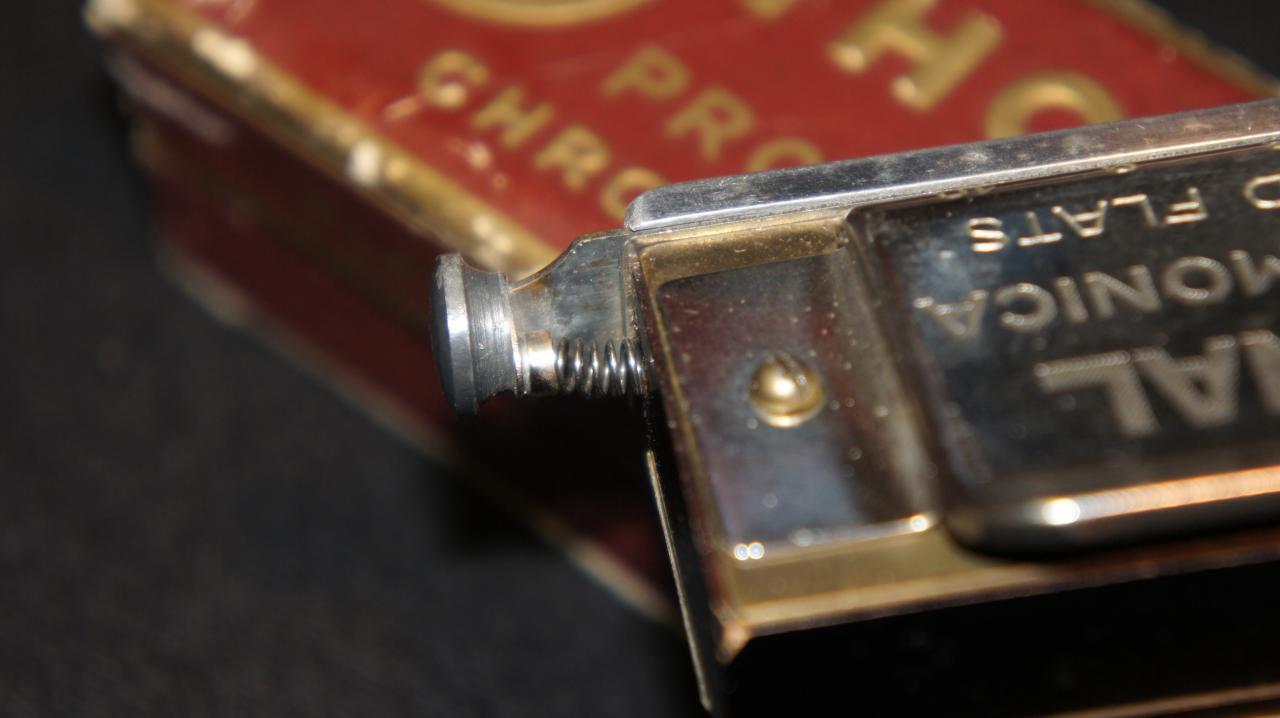
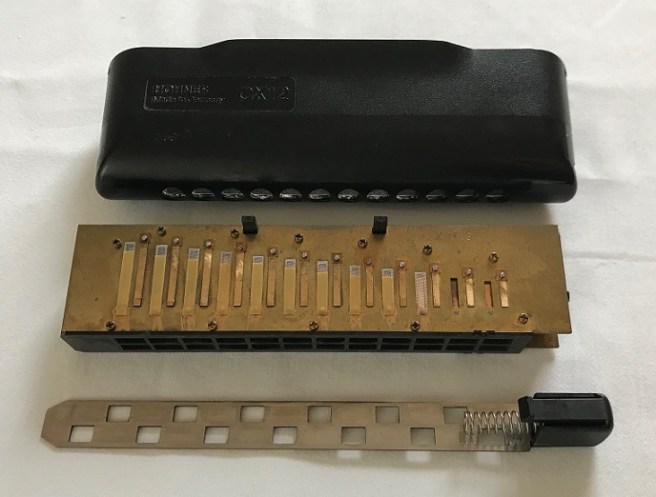
What is special about this harmonica is the mouthpiece and slider. The mouthpiece was made out of aluminum and had round holes. All other chromatic harmonicas at that time had brass mouthpieces with square holes. This mouthpiece was also thicker and connects without gaps to the cover plates. Modern chromatic harmonicas like the Hohner “Meisterklasse” and the Suzuki chromatics use a similar mouthpiece shape. Then there was the slider mechanism using an internal compression spring. It was very unique for that time. After buying Koch Hohner never used that slider innovation in their own chromatic harmonicas (only in some prototypes) until 1990 when the CX12 came out. As you can see, the slider uses a compression and not an internal torsion spring which was invented by Hohner in 1930 (more to that in my upcoming post) and still used in most of today’s chromatic harmonicas.
Disassembled slider showing the internal compression springHohner prototype (from around 1928) using a slider with internal compression spring. Form the Harmonica Museum Trossingen, courtesy Joel AnderssonThe Hohner CX-12 came out in 1992. The slider uses the same internal compression spring mechanism as the Koch chromatic harmonica from 1927
Update: apparently, Koch came also out with another version of the instrument called “Artist-Concert”. It is not a chromatic harmonica. By pressing the button you can switch from C-Major to A-minor (harmonic minor).
Koch “Artist-Concert” model in the keys of C-Major and A-minor, courtesy of Peter Widenmeyer
As I wrote in one of my previous posts, until about 1930 most of the chromatic harmonicas at that time used an external spring for slider action. It was invented by Hohner in 1910. There were few exceptions. One exception was the horn chromatic by Koch from about 1926.
Montgomery Ward & Co catalogue from 1926 showing a drawing of the Koch horn chromatic.
The text in the catalogue states: “this new style Mouth Organ has a brass horn which amplifies the volume. By turning the sounding horn forward or backward, a real chromatic scale is produced.”
Koch Horn Chromatic from the harmonica museum in Trossingen.Disassembled Koch horn chromatic, interestingly the leather valves have extra aluminum plates glued on top
As described above, twisting the bell of the horn moves the key either to “C” or “C#”. The comb and reed plate are under the mouthpiece. The harmonica has 10 holes and is Richter tuned.
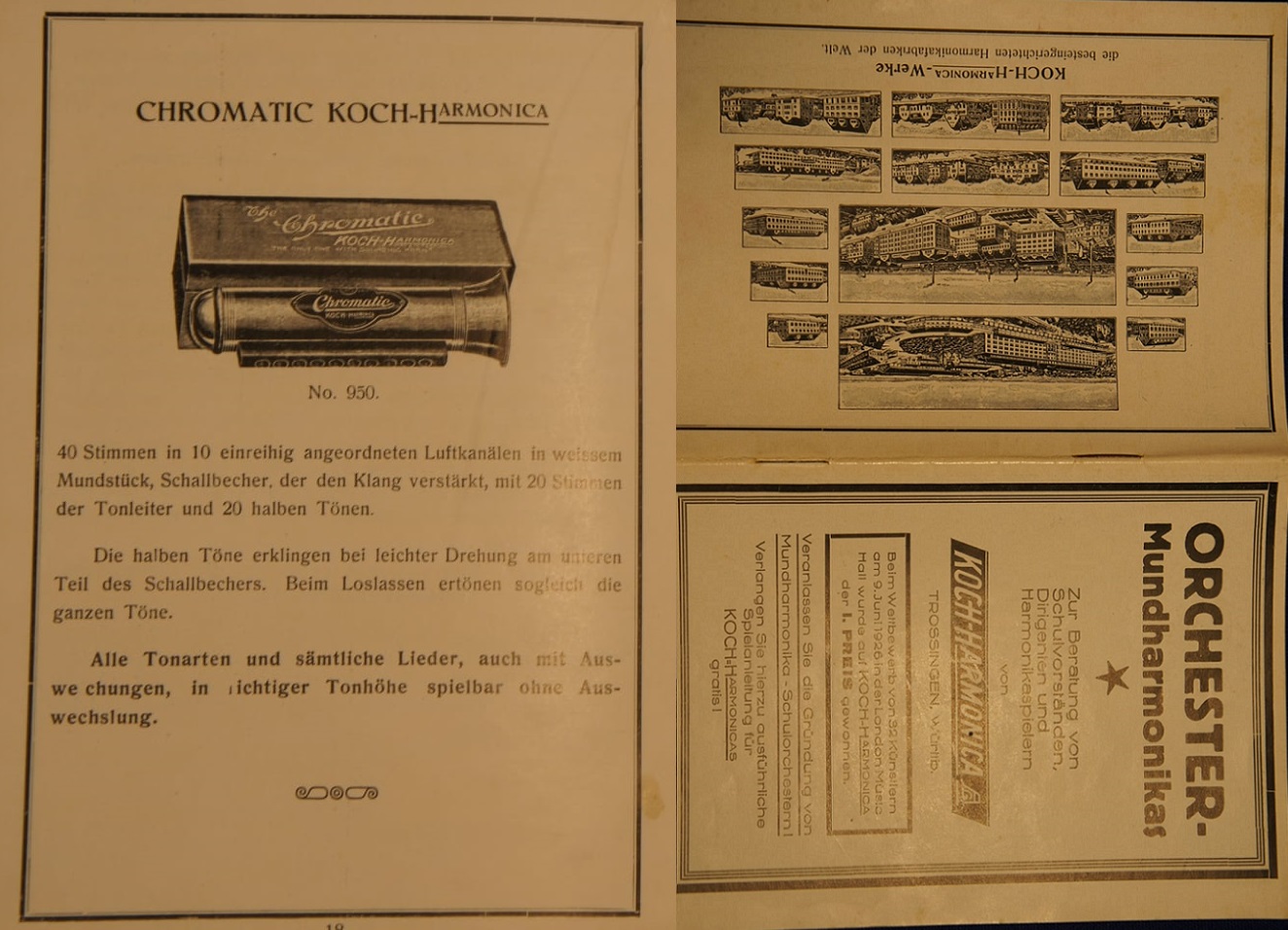
KOCH- HARMONICA booklet from 1926 which is called “Orchester mundharmonikas” showing the horn chromatic and box, courtesy of Raymond Neaud
It seems the horn chromatic harmonica was just a short lived experiment. The 1927 Koch catalogue did not advertise it anymore. This was just around one years after it was first produced.
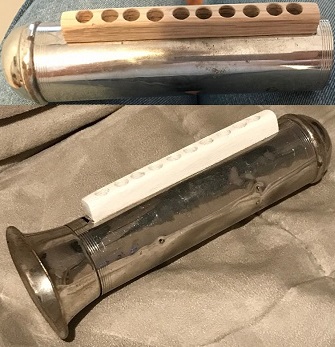
Note: I was I able to restore an old horn chromatic owned by Harland Crain that was missing the mouthpiece and logo.
Koch horn chromatic owned by Harland Crain missing mouthpiece and logo
A new custom made wood mouth piece was created, painted in the original color and attached to the body.
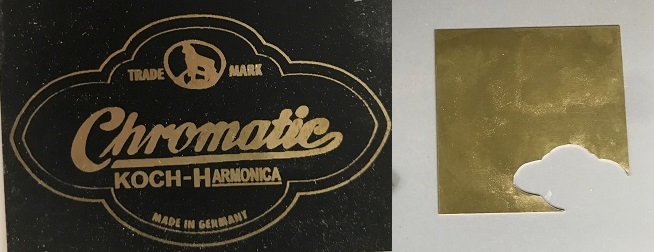
To re-create the logo, brass sheet metal adding a black coat was used. The original logo was re-trace with the help of design software. The black paint was lasered off where needed and the logo cut out.
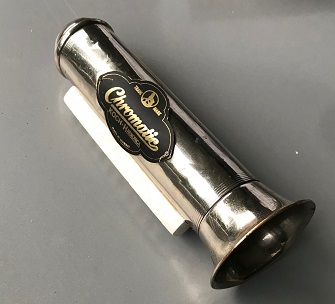
This is the final result: the Koch horn chromatic restored to its original state
The Böhm Blue Bird Improved Chromatic is a very interesting instrument. The DRGM 978090 (Deutsches Reichsgebrauchsmuster -> basically the registration to offer a basic copyright protection for design or function ) was registered in 1922.
Böhm Blue Bird Improved Chromatic, from my collectionThe above pictures show the intriguing slide mechanism
Böhm came up with a different slider mechanism. The slider will only cover one blow and draw hole and is attached to one spring situated to the top right part of the harmonica. The slider button will be pushed horizontally towards the harmonica.


















 Chromatic Harmonica History